
Metro Manila (CNN Philippines) — President Rodrigo Duterte said Friday that he could be forced to suspend the writ of habeas corpus if there are more cases of lawlessness around the country. However, he said he will not declare martial law to deal with the peace and order situation.
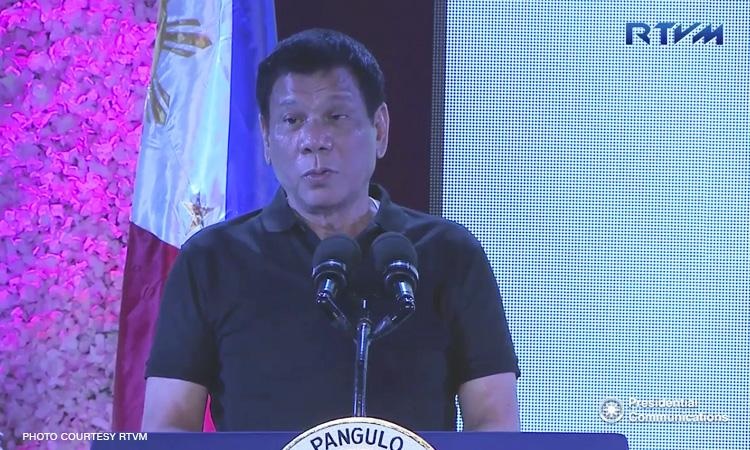
Speaking at the launch of the Pilipinong May Puso Foundation in Davao City, Duterte said the rebellion in Mindanao is one reason that he is considering the move, even though he really does not want to do it.
“Ang Maute, grabe ang bakbakan dito,” he said. “At kung magkalat itong still lawlessness, warning ko lang sa kanila ‘yan. Ayaw ko kasi hindi maganda. But if you force my hand into it, I will declare the suspension of the writ of habeas corpus, not martial law.”
[Translation: The battles here with the Maute Group are intense. If this lawlessness spreads, I am warning them. I don’t like it because it’s not nice.]
Duterte had placed the Philippines in a state of lawless violence following the bombing of a Davao City night market in September that killed 14 people and injured 69. The declaration increased the presence of security forces and heightened security measures in various seaports and airports, but did not suspend the writ of habeas corpus.
Read: Duterte signs proclamation on state of lawlessness
The writ of habeas corpus is a safeguard against warrantless arrests and illegal detentions.
Read: What is the writ of habeas corpus?
When the Supreme Court, which has jurisdiction over habeas corpus petitions, issues the writ, it commands an individual or a government official who has restrained another individual to produce the prisoner at a designated time and place so that the Court can determine whether the prisoner’s custody is legal or not. If it isn’t, then the prisoner must be released.
Sen. Richard Gordon said in September that suspending the writ for suspected drug criminals and terrorists would lead to swifter justice and prevent summary and extra-judicial killings.
Read: Panelo: Public should not be alarmed by nationwide declaration of state of lawless violence
Last resort
Duterte said he may have to suspend the writ of habeas corpus as current methods for dealing with lawlessness are too complicated and time-consuming.
“I have to build a case one by one, itong sa pulis naman ako [with the police], I will declare a suspension of the writ of habeas corpus, pick-apin ko ‘yan lahat [I’ll have them all picked up],” he said.
Duterte also said the power to suspend the writ exists to protect the country.
“If you don’t give me a choice, then you box me in a corner and I find myself helpless,” he added. “Kaya nandiyan ‘yan [That’s why it’s there].”
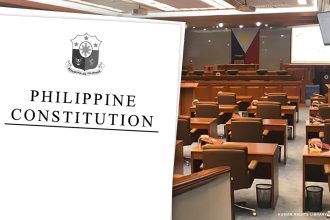
The Constitution gives the President the authority to suspend the writ for up to 60 days in cases of invasion or rebellion and when public safety requires it.
Related: Experts: No legal basis for suspending privilege of writ of habeas corpus
Within 48 hours of suspending the writ, the President must submit “a report in person or in writing to the Congress,” which may revoke or extend the suspension following a majority vote of both the House of Representatives and the Senate. In case of a revocation, the President must comply.
In addition, the Supreme Court may, upon the filing of any citizen, review the suspension of the writ and must promulgate its decision on it within 30 days from the filing.
Willing to defy Supreme Court
Despite these provisions, Duterte said if he does suspend the writ and Supreme Court orders him to revoke it, he would defy the Court and even accept jail time just to stop the lawlessness in the country.
“I can be ordered by the Supreme Court to stop it, but there are things that they cannot, and maybe, I will not stop,” he said. “Sabihin ko na muna (na) tapusin ko ‘to [I’ll just say that I’ll finish this first], tapos [then] I can go to jail. File all the charges that you can think of. But this country, in my time, will not deteriorate any further.”