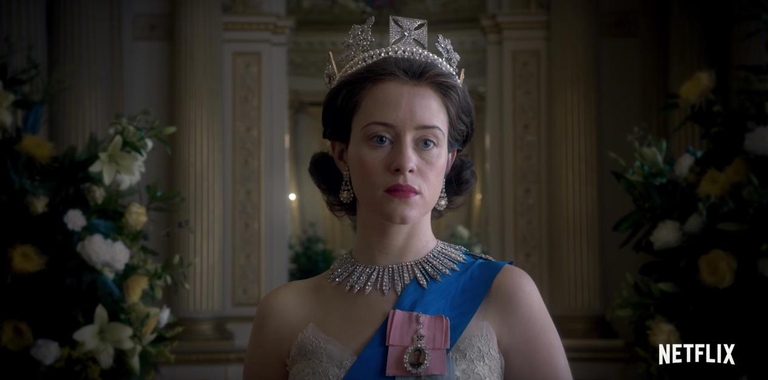

Manila (CNN Philippines Life) — With uncertainty clouding the United Kingdom over its impending divorce from the EU, perhaps television viewers can find some solace by retreating into the past and binge-watching “The Crown,” Netflix’s latest and reportedly most expensive production to date (budgeted with a whopping £100 million). This sumptuous period drama written by Peter Morgan (“The Queen,” “Frost/Nixon”) looks like the lovechild of “Downton Abbey” and “House of Cards.” It has the soapy and lavish quality of the former, and the juicy political intrigue of the latter. The show’s prestige is eclipsed only by its subject matter: Queen Elizabeth II, the current and longest serving monarch in British history.
This ambitious series is ostensibly about the nature of power and how to wield it. Just like present-day Britain, a woman has just been thrust into a country’s leadership after unfortunate circumstances. The death of King George VI (Jared Harris), the king who was made famous by Colin Firth in the Oscar-winning movie “The King’s Speech,” ushers in the start of Elizabeth II’s (Claire Foy) record-breaking reign. At just 25 years old, she immediately has to juggle the tasks of presiding over the governance of what was once the world’s most powerful country and being a new wife to her more capricious, sprightly, and sometimes politically incorrect husband Philip Mountbatten (Matt Smith).
She quickly realizes that her duties as queen often clash with Philip’s expectations of her, especially when he feels emasculated by customs that he feels undermine his authority, and in the first season we see Elizabeth try doubly hard to stake her claim both in the bedroom and in Buckingham Palace as her age and gender work against her.
Aside from her domestic travails, we also see the fraught relationship between the Crown and Parliament play out in her proceedings with Winston Churchill (John Lithgow). Churchill is a living, breathing vestige of British imperial power, and Elizabeth is supposed to represent a new age and usher in post-war stability. She immediately discovers the transactional nature of British politics in her frequent skirmishes with her first prime minister. He condescends, and she finds a way to use his stubbornness against him to gain the upper hand. His party wants him out and looks to the queen for help, but he holds on to his position for dear life. Lithgow is supremely excellent in his role as the aging, patronizing figure who, like Elizabeth, is also figuring out his new role now that the war is over.
A central theme that the series grapples with is the role of the monarchy in a world that is increasingly championing the twin forces of egalitarianism and self-determination. Elizabeth’s ascension coincides with the waning of the British Empire. Colonies are seeking independence, and the people that she is purporting to rule over are no longer simply passive subjects. Is she just a figurehead now that Parliament is in charge of the actual business of governing the country? What is there to do beyond the glamor of being The Queen? The pomp and pageantry of the monarchy is quickly becoming anachronistic, but surely there must be a reason why the royal family still maintains its hold in the imagination of the British public. We accompany Elizabeth as she figures out what exactly her purpose is. “The crown must win. Must always win,” Queen Mary reminds Elizabeth in a letter just as her reign begins.
The series is supported by rich subplots that show how the king’s death and Elizabeth’s coronation reverberated throughout the royal family. George VI’s brother, the Duke of Windsor (Alex Jennings), comes back after abdicating the throne and must reckon with the shame that he brought his family. Princess Margaret (Vanessa Kirby) and the Queen Mother (Victoria Hamilton) deal with their grief and adjust to their new roles in the royal household. Many different people working with and for the House of Windsor jockey for power now that there is a new regime.
But ultimately, this show works because of the singular talent of Claire Foy, who is able to convey both the projected steeliness and private vulnerability of the young queen. Queen Elizabeth II is known for being taciturn and reserved, and is currently seen as irrelevant at best or callous at worst, after the way she dealt with the death of Princess Diana. But no matter what you think of the British monarchy now, there is no denying that the 60-odd years of the Elizabethan era are replete with fascinating anecdotes that Peter Morgan effectively turns into an absolutely engrossing and triumphant series.
“The Crown” streams on Netflix.