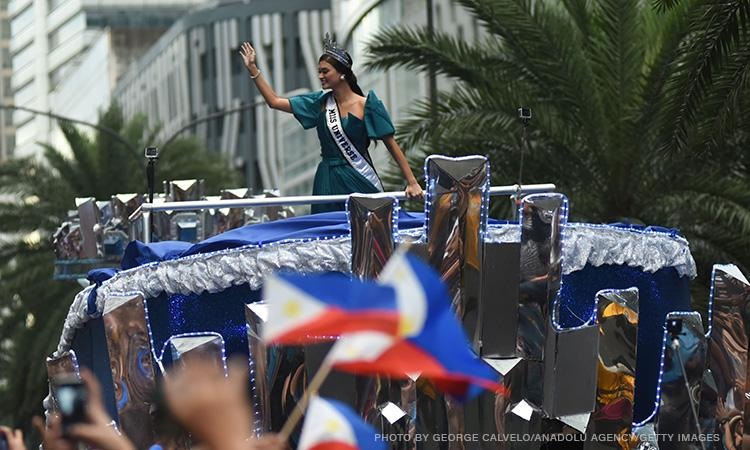

Metro Manila (CNN Philippines) — The country will again take centerstage in the international beauty contest scene as it hosts the Miss Universe pageant in January.
Jonas Gaffud, called the beauty queen maker, expects the event will not only highlight Filipino beauties and their world titles, but also Filipino fans who are said to be among the most die-hard and active in social media.
Gaffud is co-founder of Aces & Queens, which mentored 2015 Miss Universe Pia Wurtzbach and 2016 Miss International Kylie Verzosa, among others.
“I’m happy that they’re looking at us as a powerhouse in beauty pageants but more so that they’re looking at fans as very rabid. We can be the best fans in the world, but we can also be the bashing capital of the world. So we have to be educated about it. Let’s bring out what’s positive in our country,” Gaffud said.
The Philippines hosted Miss Universe in 1974 and 1994.
Filipina carnival queens
University of the Philippines Professor Wendell Capili, who wrote the book, Mabuhay to Beauty, says Filipino fascination with beauty pageants began in the early 1900s when Americans staged the Manila Carnival. The event showcased products and industries of different provinces.
A beauty contest was held to promote the carnival. The Carnival Queen was voted through purchase of ballots. Contestants then were members of distinguished and rich families, Capili said. The pageant was held every year, eventually becoming Miss Philippines. Later on, winners were named by a panel of judges. Contestants were also no longer limited among the elites.
Pageant fans also grew. Capili notes Filipinos were hooked on pageants when Lalaine Bennett of Bayombong, Nueva Vizcaya became the first Filipina finalist in Miss Universe. She won third runner-up in 1963. The Philippines won its first crown in 1969 in the person of Gloria Diaz.
Beyond entertainment
Capili adds, these Miss Universe crowns encouraged many young Filipino women to dream of becoming a beauty queen. For some, the celebrity status that comes with winning a pageant meant better opportunities for the candidate and her famliy.
“Eventually many of the winners come from middle class, lower middle class families so the pageants became a way for them to help their families raise the profile of their respective professions and at the same time create a platform to inspire other people,” Capili notes.
As for the fans, Capili says some have gone beyond the entertainment value in watching beauty pageants. In a way, a beauty queen’s victory somewhat symbolizes another woman’s hopes and dreams.
Capili explains, “After winning, many of these women become role models. Remember, majority of Filipinos are living below the poverty line so pag nanalo ka, aspirational yan sa mga babae na walang oportunidad sa buhay, lalo na yung may marginalized background. Nakikita nila itong paraan para umangat sa kanilang career.”
[Translation: Remember, many Filipinos are living below the poverty line so if you win, that’s aspirational for a woman who has no opportunities in life, especially for those in a marginalized background. They see this as a way to improve their careers.]