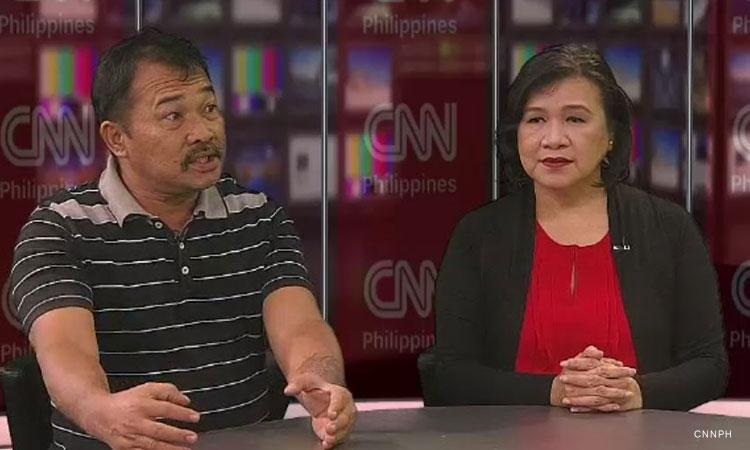

Metro Manila (CNN Philippines) — National Anti-Poverty Commission (NAPC) Lead Convenor Liza Maza suggests finding better programs as alternatives to the Pantawid Pamilyang Pilipino Program (4Ps), and says the 4Ps budget would be more wisely spent on such.
“Billions of pesos — hindi pa puwedeng ilagay doon sa pagtatayo ng mga industriya? Hindi ba puwedeng ibigay yan na subsidy para sa pamamahagi ng lupa?” NAPC Lead Convenor Liza Maza told CNN Philippines’ The Source. “Hindi ba puwede yang ibigay doon sa mga hospitals para naman we will have more public hospitals and more schools?”
[Translation: Billions of pesos-can’t we put that in the establishment of industries? Can’t we use it as subsidy for land reform? Or can’t we give it to hospitals, so we will have more public hospitals and schools?]
Maza is critical of the program, which provides conditional cash grants to the poor for assistance in health and education expenses. However, President Rodrigo Duterte has sought to maintain and expand the project.
“Hindi ako pabor sa mga doleouts, but of course there should be social protection… Pero yung long term, sinasabi nga lagi, hindi mo sila bigyan ng isda, kundi tulungan mo sila mangisda.”
[Translation: I am not in favor of doleouts, but there should be social protection. But for the long term, as they say, you don’t give them fish, but help them fish.]
The comment follows her statement that the reported drop in self-rated poverty — as shown in the Social Weather Stations (SWS) survey — does not, in reality, mean much for poor Filipinos.
“Because the survey also says plus or minus three percent, and… the lowering is about three percent, statistically it is not really significant — although it may be a good sign,” she said.
Recent SWS survey results showed a record low 42 percent in self-rated poverty, three points lower than its 45 percent rating in June. It is also a drop from the 50 percent average last year.
Similarly, the Philippine Statistics Authority (PSA) reported there were fewer poor Filipinos in 2015, compared to the same period in 2012. In 2015, the country’s poverty incidence was at 21.6 percent, significantly lower than in 2012, which was at 25.2 percent. The PSA attributes this reduction to better incomes and jobs, as well as low prices.
Related: Fewer poor Filipinos in PSA 2015 poverty statistics
“The key there is how to increase the people’s income,” said Maza, calling employment and salary increase a priority. “It is not enough that our responses should focus on poverty alleviation, but it is time for us… to look long term to really develop our economy.”
Related: Higher salaries top Filipino concern in Pulse Asia Survey
She also said that land conversion is a cause of poverty and relocation, hence the necessity for land reform.
Maza estimates that there are 26.7 million poor Filipinos, around a fourth of the population.
She said that this number reflects the poverty incidence as defined by PSA, but NAPC must also consider the “multidimensional aspects” of poverty, which include access to education, housing, transportation, and food.
Maza added that the statistics should “reflect the reality on the ground.”
If anything, she said survey results “(tell) us that we should work harder,” and more “convergence efforts” among government agencies, the private sector, and the poor are necessary,” she said.
The other guest on The Source — Carlito Badion, Secretary General of Kalipunan ng mga Damayang Mahihirap — also suggested that the government remove the 4Ps in favor of creating jobs.
“Ang panawagan nga namin diyan ay itigil iyan at sa halip na bigyan mo ng doleout, ilikha nalang yan ng trabaho, para tiyak na tuloy tuloy pa ang pag-unlad,” said Badion.
[Translation: Our call is to stop that and instead of giving doleouts to the poor, use the funds to create jobs, so that we can ensure continuing development.]