
WATCH: Analysts say $15B China deals raise questions
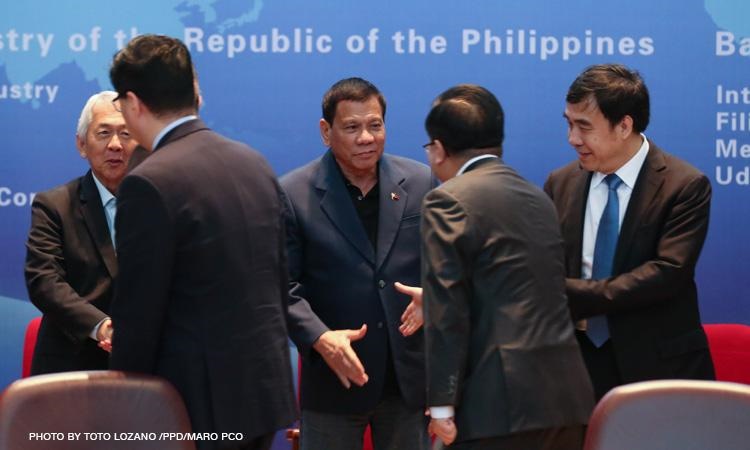
Metro Manila (CNN Philippines) — No infrastructure deals have been committed to China, the government has assured, amid questions over the $15-billion package it signed during last week’s state visit.
According to the Bases Conversion and Development Authority (BCDA), it only signed memoranda of understanding (MOU) with several Chinese firms.
The MOUs only authorize the Chinese firms to explore the projects and assess their technical and financial viability. They don’t amount to an award of contract, BCDA President Vince Dizon said in a statement on Thursday.
“All these projects will be subject to the strictest rules and most rigorous processes of public procurement under Philippine law. But we are very far from that point in the process, we are only at step 1 — the feasibility study…” he explained.
The state-run BCDA signed MOUs for several big-ticket infrastructure projects:
Subic-Clark railway, with China Harbour Engineering Co.
Bonifacio Global City-Ninoy Aquino International Airport Bus Rapid Transit segment, with China Road and Bridge Corp.
Property development of BCDA properties, with China Fortune Land Development, Co. Ltd.
ICT network development in BCDA properties, with Huawei Technologies, Co. Ltd.
According to documents reviewed by CNN Philippines, the MOUs state the Chinese firms will be responsible for conducting pre-feasibility and feasibility studies for the projects – at their own costs.
Even if the projects are found viable, the BCDA is not bound to pursue them. If it does, it will have the power to decide how the infrastructure will be procured.
While the Chinese firms will be allowed to bid for the projects, “it is understood, however, that the BCDA is not precluded from considering other proposals,” the MOUs read.
Under Philippine procurement law, all public projects — whether funded by development loans or pursued by joint ventures — must go through a competitive bidding process. This is to ensure taxpayers get the most bang for their buck.
Reading the fine print
The group Former Senior Government Officials (FSGO), however, still pressed the government to reveal the “fine print” of the deals.
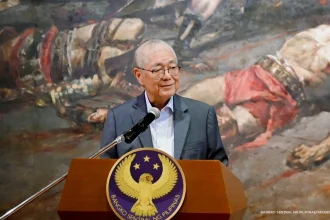
“The way it’s being spun, it seems like it’s a committed investment. So what’s critical here is: what are the terms of agreement in this MOU and how binding is it?” FSGO member Garth Noel Tolentino said in an interview.
He explained that even if MOUs aren’t binding, they can still give an “undue advantage” to the partner company. They can get information competitors don’t have access to, or the feasibility studies could require skills and technologies only they possess.
Should the BCDA take on the infrastructure projects, Tolentino urged it to follow the proper bidding process, scrutinize the terms of the deals, and investigate the prospective investors.
This, as reports showed one of BCDA’s Chinese partners have been blacklisted by the World Bank.
China Road and Bridge Corp., which will work on the bus system, was found guilty of anomalous practices during a road project it was working on — right here in the Philippines. It is barred from all World Bank-funded projects from 2009 until 2017.
“The corruption was here. If we keep working with that company, does that mean we are deviating from international standards of project management? We should deal only with above-board organizations,” Tolentino said.
The road to debt
Sudhir Shetty, East Asia chief economist for the World Bank, likewise urged the government to take caution when taking on infrastructure deals.
More and more countries and international lenders are offering funding, but the government should still make sure the projects they pursue build on a long-term strategy, he said.
Infrastructure deals are worth millions of dollars and stretch on for years. He pointed out, “Bad projects don’t pay for themselves over time. They are just bad projects.”
The consequences for the Philippines could be dire, Shetty said. Once contracts are signed, the government — and taxpayers — are bound to follow through with them, regardless of whether the projects pay off.
“If there’s one thing the Philippines has done very successfully over the last decade, it is to fix its debt situation,” he explained.
“Now, that has been long, and it has been painful, but it has been worthwhile. Whatever is done going forward needs to be done in a way that doesn’t put your debt situation back into a difficult position.”