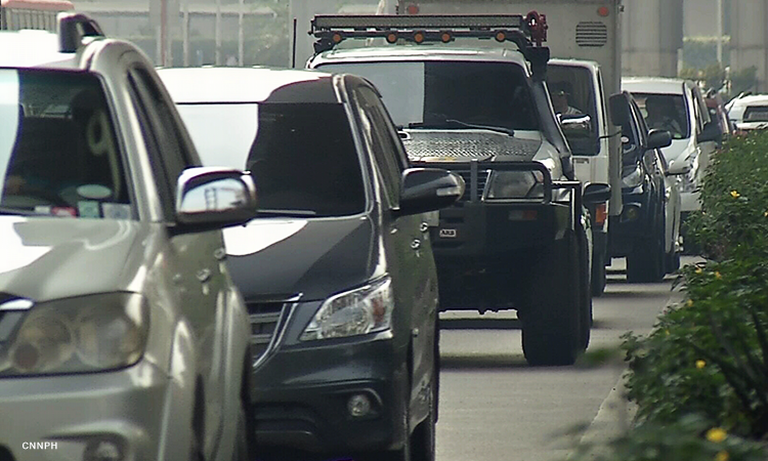

Metro Manila (CNN Philippines) — Car sales continue to go up in the Philippines.
The Chamber of Automotive Manufacturers of the Philippines Inc. projects that the industry will exceed its sales target of 370,000 vehicles this year. This is nearly 100,000 more than 2015.
Car buyers now have a wider range of brands and models to choose from. European and Chinese brands have entered the local market over the past decade to compete with American, Korean and Japanese companies.
But just as important as choosing a car is picking the insurance policy that goes with it. And just like cars, insurance plans vary a great deal.
Below are three things to consider when deciding which insurance policy to buy:
1. Study options beyond basic insurance
The Insurance Code mandates all motor vehicles to have compulsory third party liability (CTPL) insurance as a minimum. This is offered by different companies around the country. In other words, a vehicle cannot be registered at the Land Transportation Office if it does not have CTPL insurance.
The premium, which is the amount the car owner pays for the policy, differs depending on the vehicle. Insurance companies consider the vehicle price, model, age and type of use (private or commercial).
CTPL only covers liability for the death or injury of a third party. Damage to the car due to natural disasters, car theft, among others are not covered by CTPL.
Insurance firms offer additional coverage and options for such risks, but at higher cost under “comprehensive” or “full coverage” plans.
Prudential Guarantee and Assurance (PGA), Inc. president Celestino Ang told CNN Philippines that comprehensive insurance is not a priority for many vehicle owners until they get involved in a major accident.
“Some people may afford to lose a car because they can buy another one without any problem,” Ang said. “But some people may only have one car and if they lose it, where will they get the money? You may ram into a group of pedestrians in an accident. Now that is unquantifiable. That’s why you need insurance, at least, to help you cross over those issues.”
2. Assess your risk
Because of the different coverage plans, car owners must find the most cost-effective that fits their lifestyle.
The policy with most expensive premium may not always be the best for the owner. Although the Philippines is the fourth most disaster-prone country in the world by United Nations standards, some areas are less risky than others.
Car-owners who park and drive in crime-prone areas might want to include car-theft insurance. Those living in flood-prone areas may want to sign up for a plan covering “acts of God.”
Although it’s important not to overspend, there is no such thing as risk-free car ownership. Spending a little more now may give savings in the future.
“All insurance companies provide you the extra that comes with their policies,” Ang said. “Look for one that is going to give a worry-free experience and is unlimited in terms of services that they give you. Like if you break down somewhere on the way to Vigan, they can tow you back to Manila. Or if you want to stay overnight because it’s the wee hours of the night, then get a policy that will provide accommodation and let you travel the following day.”
PGA’s Auto Insurance Program is the only insurance policy that offers the following extras on top of free towing and free vehicle-breakdown services:
Free retrieval service if the vehicle falls into a gutter or ravine
Free ambulance service that can be immediately dispatched to bring the victim to a medical facility
Free emergency-message-relay service that can, upon the client’s request, convey urgent messages concerning a vehicle breakdown or accident
Free alternative transport to a destination that provides clients with an appropriate vehicle in case their vehicle is involved in an incident outside Metro Manila and cannot be repaired immediately
Free alternative overnight accommodation in case the client’s vehicle is involved in an incident outside of Metro Manila and an appropriate alternative vehicle is unavailable
3. Caveat emptor
“Buyer beware.”
The Insurance Commission keeps a list of licensed insurance companies. It is best to pick from this list to avoid ending up with fake insurance plans. Unlicensed insurance firms may also go bankrupt and fail to pay clients.