
Manila (CNN Philippines Life) — It was the 2010 Metro Manila Film Festival, the 36th edition of the annual film fest that opens exactly on December 25, where kids have no schoolwork to prioritize and are rich with money given by their once-in-a-year generous godparents and relatives.
In that edition, one of the competing films is Luis C. Suarez’s “RPG: Metanoia,” a cartoon that had everything going for it. It had the backing of Star Cinema, with big stars like Aga Muhlach, Vhong Navarro and Eugene Domingo lending their voices to give life to the cartoon’s characters. It was very well made. While seemingly outdated if compared side by side with Hollywood cartoons of bigger budgets, it nevertheless possessed an aesthetic that is unique, one that understood that it can never compete with spectacular imports by means of visual dazzle but with details that concentrated on Filipino sights and customs. The movie emphasized Filipino virtues and traditions, being a film that had the story of a boy, voiced by child star Zaijan Jaranilla, whose childhood is being wasted away playing video games instead of traditional games that fostered real camaraderie. It had nostalgia on its side.
“RPG: Metanoia” however was a commercial failure. A few days after Christmas, cinemas were pulling it out, exchanging it with titles like Wenn Deramas’ “Ang Tanging Ina Mo (Last Na ‘To!),” an inane comedy about a woman who in previous films became a struggling mother of ten kids from three husbands and the president of the country, and Tony Y. Reyes’ “Si Agimat at si Enteng Kabisote,” a fantasy flick that saw two favorite characters battle the forces of evil while exchanging jokes. It certainly seemed that good-natured children’s flicks are no longer in flavor with kids and their families. In a cultural climate ruled by television, films would need visible stars like Ai Ai De Las Alas and Vic Sotto and their quick but boorish punch lines to earn money. Stories of children becoming heroes instead of them being saved by adults aren’t fashionable to children. They prefer faster pleasures from entertainment that looked and felt exactly like what they have been accustomed to from hours of watching variety and gag shows that are riddled with advertisements in between scenes. For their parents, nostalgia doesn’t matter.
It wasn’t always like that.
Previously, movies that catered to children did very well. Child stars were birthed not from nightly soap operas but from movies that didn’t have to beg to be watched. Who could ever forget Niño Muhlach being doted on by his gay foster dad played by the inimitable Dolphy in Lino Brocka’s “Ang Tatay Kong Nanay” (1978), or teenage J. C. Bonnin, Francis Magalona and Ramon Christopher fighting baddies in Pablo Santiago’s “Ninja Kids” (1986), or the Gutierrez twins being cute and cuddly in the many adventure and comedy films they committed to as kids? In the 90s, major studios even bankrolled productions that were set abroad. Romy Suzara’s “Sarah… Ang Munting Prinsesa” (1995) had Camille Prats, who played the titular heroine, and Angelica Panganiban, exchanging dramatic dialogue in England. Suzara then followed it up with “Cedie” (1996), which had Tom Taus touching hearts with his exemplary kindness in foreign locations that looked like London at the turn of the century. Sure, those expensive exercises were all inspired by the popularity of the anime series based on literary classics that had children glued to their television sets, but still, there were efforts for cinema, for spectacle and affect that was beyond the meager ambitions of the boob tube.
Meager ambitions however have proven to be more profitable. With Hollywood invading local theaters with its universal stories that had all the gloss and glamour to hypnotize Filipino children, local producers retreated to television, which didn’t require families to shell out hard-earned cash for tickets and popcorn to get erstwhile escape. The few who laid their trust on the Filipino audience retained their artistic integrity but with such a hefty price on their finances and pride. Unable to pitch their projects to major studios, it was therefore inevitable for filmmakers to scale down their efforts, to retreat to independent filmmaking where their stories that centered on children and their various virtues were treated with respect by the handful of film lovers whose tastes were far more varied than the average filmgoer.
This exodus of films about children to lower budgets but more freedom saw a deluge of interesting films being made. Auraeus Solito’s (now known as Kanakan Balintagos) “Ang Pagdadalaga ni Maximo Oliveros” (2005) was that untypical tale of a flamboyantly gay boy who comes of age living with a family of small-time crooks and loving an incorruptible cop. Doy del Mundo’s “Pepot Artista” (2005), on the other hand, features a boy who aspires to become an actor. Cinemalaya, which then couldn’t have predicted how it would usher a brand of local filmmaking, has already produced two films that featured children in its inaugural edition. Others would of course follow. There’s Sockie Fernandez’s “Gulong” (2007), about kids obsessed with bicycles, Adolfo Alix, Jr.’s “Kadin” (2007), about children from Batanes in search of their lost goat, Francis Xavier Pasion’s “Sampaguita: National Flower” (2010), about flower vendors and their joys and sorrows, and Derick Cabrido’s “Children’s Show” (2014), about children who fight for a living.
Outside Cinemalaya, there’s Ralston Jover’s “Bakal Boys” (2009) which saw children diving the polluted waters of Manila Bay for money. His “Hamog” (2015), on the other hand, had street kids face abusive adults. The topics were diverse, and less about imparting lessons to children, and more about dissecting youth for issues that their filmmakers deemed were important enough to be told in such artful ways. The films utilize children’s innate innocence as a springboard to emphasize a society that corrupts. They were dark films, far from the types commercial studios would usually bankroll, even during the time when those films were still profitable.
Nostalgia is of course a common subject. Filmmakers were once children, and the more idealistic ones treasured their childhood experiences and mined them for stories and concepts. In “Pisay” (2007), Balintagos traveled back in time to relay experiences of high schoolers at a volatile time where they were venturing into adulthood while the country was in a state of political upheaval. Jerrold Tarog’s “Senior Year” (2010), on the other hand, is more contemporary and universal as it examines teenagers going through very familiar issues. “Blue Bustamante” (2013) showcased director Miko Livelo’s obsession with sentai, television shows that featured heroic teams in color-themed costumes, in a story that had a father do the oddest of jobs just to keep his family comfortable. Keith Deligero’s “Iskalawags” (2013) featured the same nostalgia-driven narrative, but this time, concentrating on a group of boys in their coming-of-age adventure that had their adoration of 90s action-star Jeric Raval as its heart and core.
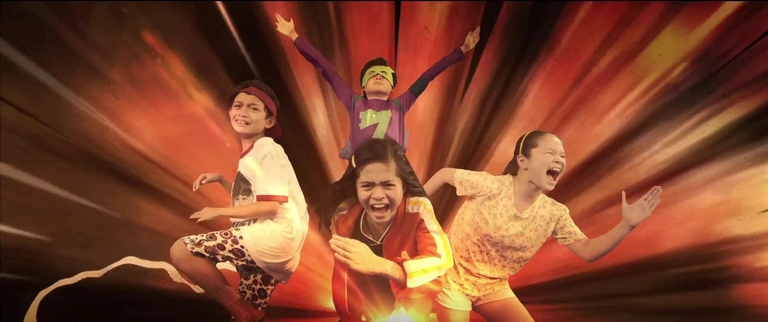
Mihk Vergara’s debut feature “Patintero: Ang Alamat ni Meng Patalo” (2015) — which opens in theaters this week — is enjoyably more straightforward. Sure, its conceit is also built on memories of growing up without “Angry Birds” or “Pokemon Go,” where games were played on the streets, with actual friends and opponents competitively running and chasing for erstwhile victories. However, it doesn’t see the need to touch base on grown-up perspectives and conflicts. It subsists on a purity that is relatable even to children, and does not ambition on being more pertinent or relevant than it needs to be. In other words, Vergara’s film is that lovely middle ground that could prove to be entertaining enough to rekindle interest in children’s films. If not, then there’s always nostalgia of a time when films about children were as innocent as their subjects to carry this nation, whose population is mostly composed of children, through.