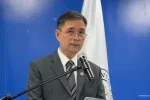
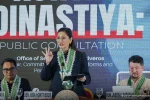
Metro Manila (CNN Philippines) — Vice President Leni Robredo said Tuesday she agrees with President Rodrigo Duterte’s statement that illegal settlers should not be ejected from their homes if there are no places where they can be resettled.
However, Robredo, said providing relocation sites where there are no livelihood opportunities won’t solve the housing problem either.
“As long as I sit here as President, there will be no demolitions without relocations,” Duterte said in his first State of the Nation Address.
Robredo, who heads the Housing and Urban Development Coordinating Council, said she agrees with that statement but she observed that relocation sites for Metro Manila’s urban poor are usually far from their workplaces and offer no livelihood.
“Kasi mabuti kung ‘yong nire-relocatan natin mayroong available na ibang trabaho o may livelihood. Karamihan wala naman, at least ‘yong mga nabisita ko wala,” Robredo said.
[Translation: It would be good if the relocation sites we are offering have available jobs or livelihood. But most have none, at least those that I have visited have none.]
This is why most families are against off-city relocation, she said. She said some heads of families that have been relocated outside Metro Manila end up going back to the city – paying for board and lodging – to continue earning a living.
In-city relocation
Leticia Alonzo, 56, was born in an informal settler community in Quezon City and now faces the prospect of being ejected from her home. This is where she met her husband, where they raised their children, and she said she can’t imagine ever leaving, especially if it would mean moving somewhere far.
“Syempre [sana] dito sa Quezon City lang din … kasi dito ang trabaho namin eh,” Alonzo said.
[Translation: Of course I hope [it will be] just here in Quezon City … because this is where our jobs are.]
Robredo advocates relocating residents as near as possible to their original homes.
“As much as possible on-site. Kung hindi posible, kahit off-site basta in-city pero malapit dun sa trabaho nila,” Robredo said.
[Translation: As much as possible on-site. If that is not possible, then off-site, as long as it is in-city and close to their workplaces.]
Robredo admitted finding places for in-city housing projects is going to be a challenge, especially because Metro Manila is already overcrowded.
But she is not giving up, despite the limitations of the HUDCC.
“HUDCC is just a coordinating council,” Robredo said, adding that its powers are limited to planning and coordinating with other agencies. It also does not receive a budget allotment for housing projects.
Robredo said she has already consulted urban poor groups and has scheduled meetings with project developers to come up with better solutions to the country’s housing woes.