



Manila (CNN Philippines Life) — In a 2012 interview with Oprah Winfrey, Kim Kardashian talked about her sex tape by saying that it was “pretty much how I was introduced to the world.” “It was a negative way,” she added, “so I feel like I had to work 10 times harder to get people to see the real me.” Twelve seasons of “Keeping Up with the Kardashians,” 46.6 million Twitter followers, 3,592 Instagram posts, and $160 million dollars in video-game revenue later, Kardashian has indeed worked hard to get people to see the real her. So much so that the lines between her personal and public lives have blurred into one multiplatform media entity.
But all of this is old news. It seems that what’s keeping Kardashian up these days is redemption.
Shortly after her husband, Kanye West, released the alleged Taylor Swift-sanctioned song “Famous,” Swift ordered her army of representatives to release a statement that said: “She declined and cautioned him about releasing a song with such a strong misogynistic message. Taylor was never made aware of the actual lyric, ‘I made that bitch famous.’” On the night of July 17, Kardashian took to her Snapchat account to release a video of the phone call between West and Swift where Swift was caught on tape saying that she thought the line, “I feel like me and Taylor might still have sex,” was a compliment. A couple of hours later, Swift released a statement through her Instagram account where she let it be known that she “would very much like to be excluded from this narrative.”
Instead of it feeling like something that’s happening 13,232 kilometers away, it feels as though that Snap were sent to us straight from our close friend Kim Kardashian. Which explains why people have quickly rushed to her defense: Memes have been created, listicles have been made, and her Snapchat story has become gospel truth.
Both Kardashian and Swift have been victims of narratives that mainstream media has shaped for them. Kardashian has always been portrayed as the vapid (as found in her Forbes June 2016 cover story), self-obsessed girl with a 40-day marriage and a sex tape. Swift was once the golden child, a small-town country girl who constantly got her heart broken by evil boys. Kardashian, being the outsider, was forced to form her own niche, over the years building up her social-media accounts as the go-to source for Kardashian news. She developed a following and a relationship with her audience by baring everything (naked selfies included), while Swift chose to isolate herself, mostly sticking to cryptic retweets and unfollows to announce her breakups.
This accessibility is what makes that West Snapchat more salient. Instead of it feeling like something that’s happening 13,232 kilometers away, it feels as though that Snap were sent to us straight from our close friend Kim Kardashian. Which explains why people have quickly rushed to her defense: Memes have been created, listicles have been made, and her Snapchat story has become gospel truth.
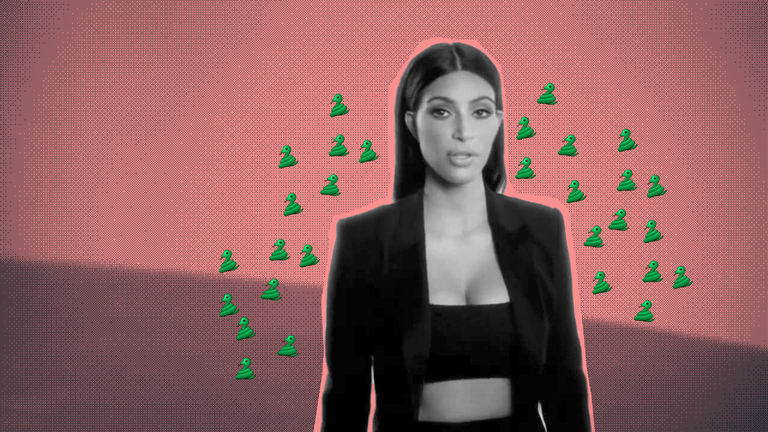
On the surface, the narrative may look like a years-long battle between West and Swift, beginning with their onstage encounter at the 2009 MTV Video Music Awards. But the Snapchat post is a testament to the power of Kardashian as a content creator. By choosing to release the video through her Snapchat account (with expansive social-media support from updates to her emoji app, Kimoji, in celebration of National Snake Day), Kardashian bypassed all major news sources, effectively becoming her own media channel.
The media theorists Max McCombs and Donald Shaw describe the power of news agencies thus: “the press and the media do not reflect reality; they filter and shape it.” If Kardashian keeps this up, we can look back at this incident as the beginning of an even bigger story about how she has been singlehandedly adept at molding our realities.