
Metro Manila (CNN Philippines) — The Hague ruling on the South China Sea has eased tensions for now, but the dispute will continue to hang over the Philippines and the region for some time, credit raters have said.
Geopolitical risks are emerging in Asia, and the shift in the global balance of powers will change how these issues play out, Fitch Ratings said in a report on Thursday.
Even before the Philippines filed a case against China in 2013, there have been several territorial disputes issues in the region, Fitch noted.
Vietnam has competing claims against both the Philippines and China for parts of the South China Sea, while Japan and China are fighting over areas in the East China Sea.
The conflicts between Taiwan and China, as well as South Korea and North Korea, are decades-old, but they still “have the potential to flare up,” it said.
These tensions are worsened by the fundamental changes to the region’s security paradigm. Fitch said the influence of the United States over Asia was waning, while China was moving to expand its presence.
In the short-term, however, there could be peace — albeit an uneasy one — Moody’s Investors Service said in a separate report.
Relations between the Philippines and China remain frosty, but Moody’s said it didn’t expect either country to act on the situation.
The Philippines scored a crucial victory on Tuesday when the arbitral tribunal ruled it had exclusive economic rights over the disputed waters. China has rejected the ruling outright.
Despite this, the Philippine government responded to the decision, not with celebration, but with a call for “restraint and sobriety,” Moody’s observed. Chinese officials, meanwhile, said they were keen to start bilateral talks and hammer out “provisional arrangements.”
“While there may be actions or statements following the ruling that stoke strains temporarily, we do not expect the sort of substantial broadening and deepening of disagreements that would materially affect either China’s or Philippines’ economy, budget or policy effectiveness,” the credit rater said.
Both Fitch and Moody’s warned of the heavy implications that a conflict could bring.
Related: Expert: Brexit may affect Filipino migrants, remittances
The Philippines needs access to the South China Sea for its fishing vessels, Moody’s said. Fishing accounts for about 1.5% of its gross domestic product (GDP).
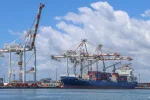
Moreover, the country gets a lot of business from China. China was its fourth largest source of tourists in 2015. China was also its fourth largest export market last year, accounting for 10.5% of shipments, worth an estimated 2.1% of GDP.
As for China, conflict could damage its campaign to cement itself as the regional leader and a global player, Moody’s said.
China is seeking to internationalize the renminbi (official currency of the People’s Republic of China) to put it alongside the dollar, the euro and the yen as some of the world’s major currencies, it noted.
It is also looking to become a major source and destination of foreign investments. The report pegged China’s inward investment at $250 billion in 2015 — 2.3% of its GDP; outward investment also grew sharply to $212.8 billion as of the first quarter of this year.
Fitch added that if the conflict was severe enough, the dispute could dampen investor confidence in Asia as a whole. The risks could even go beyond the region, it said, as the “Brexit” fallout demonstrated last month.