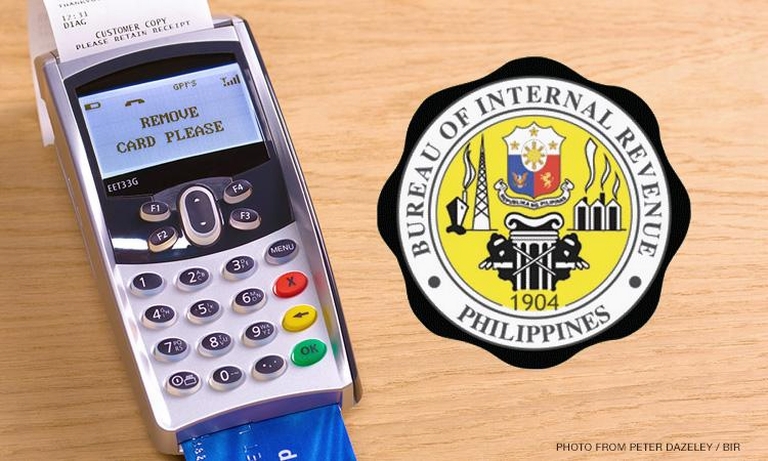

Metro Manila (CNN Philippines) — The Bureau of Internal Revenue (BIR), in a regulation issued on March 23, said it would now accept card payments through authorized banks for the payment of taxes, interest, penalties, surcharges and other fees.
However, Landbank is the only bank that will likely be ready to accept card payments ahead of the April 15 deadline for the filing and payment of annual income tax returns (ITR).
“[I]t is imperative that alternative modes of tax payments… must be provided for the convenience of both the tax administration and the taxpaying public,” read Revenue Regulations No. 3-2016.
According to the rules, all authorized agent banks of the BIR will be able to accept card payments. Taxpayers can use any Philippine-issued card that is under their name. Their corresponding tax returns will have to be filed electronically through the electronic BIR (eBIR) forms online.
Card payments will be optional, and taxpayers will shoulder the convenience fees and other fees charged by banks and card companies. These payments will not be deducted from the tax amount due to the BIR.
Any payment errors also won’t be charged back to the taxpayer’s credit or debit card. The taxpayer will have to file for a tax credit from the BIR or a refund with the bank or card company.
Landbank first, others to follow
With the ITR deadline only a week away though, only Landbank has secured the bureau’s approval to accept card payments, BIR Deputy Commissioner Nelson Aspe told CNN Philippines on Thursday (April 7).
He added that more banks will be included by June once negotiations finish.
Banks will only be given BIR approval to accept card payments once their information systems have been tested for accuracy and security.
Banks are required to encrypt their systems with industry-standard technology, and report all their transactions to the BIR and the Bureau of the Treasury every day. They will be penalized for procedural errors, as well as late transmission, reporting or remittance.
“We don’t expect banks to have a hard time complying. Card payments are now widely used in the private sector,” Aspe said.
He declined to list the banks the BIR is in talks with.
Easing the burden
All taxpayers are required to file their ITRs for 2015 by April 15. Unlike salaried workers, though, whose taxes are already deducted by their employers and remitted directly to the BIR, the self-employed and those with multiple employers have to process their own returns every year.
It is often a long and arduous process. According to the World Bank’s 2016 Doing Business report, the Philippines ranks 126th out of 189 countries in terms of the ease of paying taxes. It takes a firm 193 hours a year to comply with tax rules in the Philippines — just beating the likes of Myanmar, Kazakhstan, Haiti and Sudan.
“This change will greatly help people like the self-employed or the owners of micro-, small- and medium-sized businesses like market stalls and mall stores,” Aspe said. “They no longer have to line up for hours at the BIR. It doesn’t matter where they are, as long as there is a bank and there is an Internet connection, they will be able to pay their taxes and file their ITRs.”