
(CNN) — Longing for refuge in Germany but stuck in limbo in Greece. That could be the fate of masses of new migrants to Europe, the United Nations warned.
Reluctance of some European countries to take refugees and discussions in Germany to limit the number there have had little effect on the tide of humanity arriving from the East. Three times as many migrants have arrived so far this year than by the same time last year in Greece – by far their main gateway to Europe.
But as migrant boats and rafts cross the Mediterranean Sea and land on beaches in peak numbers, gates into Europe are narrowing markedly.
More than 100,000 people have arrived in Greece so far this year. Last year, it took until June to reach that sum. Countries on the so-called Balkan route to central Europe reacted recently by imposing restrictions.
Afghans stopped
Macedonia stopped Afghans from entering from Greece this week, and on Tuesday (February 23), when migrants shook and climbed over border fences and barbed wire, Greek police corralled them and brought them back.
That tightened border was a small part of a bottleneck that reaches all the way back to Austria, the Office of the U.N. High Commissioner for Refugees (UNHCR) said.
A week ago, Austria announced it would let no more than 3,200 new entries into the country per day and take only 80 applications for asylum per day.
“Slovenia followed suit and announced a similar cap to restrict movements across its borders,” the UNHCR said.
Police screening
A day later, heads of police in countries all the way along the Balkan route announced an agreement to start screening refugees at the Macedonian border with Greece.
“That will create further chaos and confusion. It will increase the burden on Greece, which is already shouldering a very big responsibility in managing these people,” said UNHCR chief Filippo Grandi.
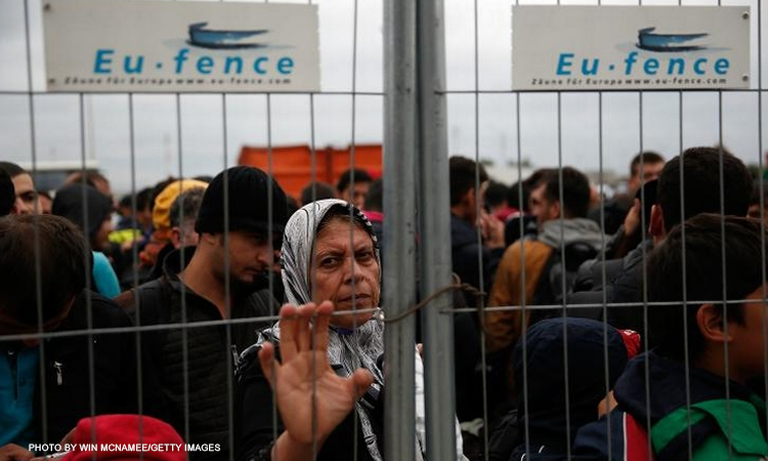
People are already starting to back up at the Greek border.
And Greece is not happy with its neighbors’ actions.
“It cannot be tolerated that some member countries do as they want on their own regardless of what everyone else has agreed upon, and this should not be accepted by the European Union,” said government spokeswoman Olga Gerovasili.
In the freezing cold
To get an idea of what a bottleneck could do as the human tide crashes into it: Last week alone, before the measures were announced, 7,286 refugees crossed from Greece into Macedonia, the International Organization for Migration (IOM) said.
Last year, 853,650 migrants entered Europe via Greece, and the portion of children arriving bumped up.
Some of the decisions by countries along the Balkan route amount to profiling, the UNHCR said. They select people based on nationality and not the dangers they face from violent conflict.
They could also strand people outdoors in freezing weather and make them vulnerable to human traffickers.
In Italy, where many refugee boats also go ashore, the situation is less dire. The country has received more than 7,500 migrants this year. Last year, more than 150,000 migrants arrived there.
On Tuesday, the Italian navy rescued 1,431 people from boats, and it recovered the bodies of eight more.
Altogether, more than 400 migrants have died at sea this year while trying to reach Europe.
This story was first published on CNN.com, “Migrants flock to Europe in peak numbers, getting stuck in Greece.”