
Metro Manila (CNN Philippines) — What have Filipinos learned from the 1986 People Power Revolution and how are these lessons used today?
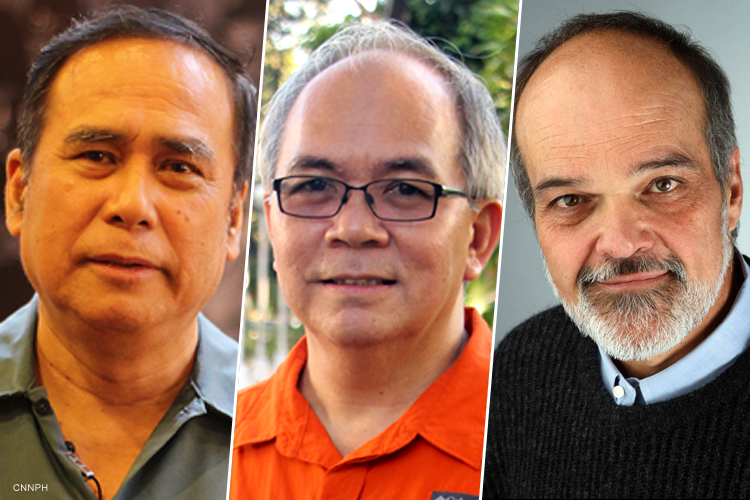
Three people who were present during the 1986 People Power Revolution spoke with CNN Philippines’ Mitzi Borromeo on Profiles to talk about how the events that happened during those years relate to Filipinos now.
Bing Formento, a tri media reporter and who was at the time the director of the Ministry of National Defense Press Corps, recalled the events of the revolution.
He was a key figure in the reporting of the events in EDSA as they unfolded.
Formento said he was nervous during the moments that led to the start of the revolution. He had gotten an exclusive on-air interview with then-Defense Minister Juan Ponce Enrile which heralded the start of the call for allies by him and then-Armed Forces Chief of Staff Fidel Ramos.
Formento said he asks himself what the result of the People Power Revolution was 30 years after it happened.
He said, “Is there change? Yes. There has been a big change. Corruption has gotten worse. It has spread. During Marcos’ time, he controlled corrupt officials because he was in power.”
When asked on the significance of People Power, especially for the youth who know nothing about it, Formento said, “People who are 45 years old and younger have no idea about what happened. They should look back on history and learn why it happened. What was the purpose of People Power? What was its message? Filipinos were united. The left, the right, and the middle, all of society became one to take Marcos down.”
But he added, “But was there a result after that?”
People Power via an amateur’s camera
Nino Sinco, a teacher who took part in and documented the protests, found himself in some very dangerous situations as he took part in the revolution.
Sinco said he initially knew nothing about the events that were brewing. It was only when they heard Ramos had “joined the fray,” as well as Jaime Cardinal Sin called on people to converge, did they take it seriously.
He was able to see the crowd in EDSA grow larger by the day as People Power progressed.
Sinco said he “takes it with a grain of salt” when the 1986 Revolution is referred to as “bloodless revolution,” recalling that a child who was near him was shot and died.
He said that now is a “completely different” day and age and people are sometimes unable to relate to the happenings of 30 years ago.
He said, “I’m trying to imagine it backward. What if in [19]86 people had their cellphones and their smart phones and their cameras? You’d have millions of pictures – or billions of pictures – from that. Unlike now, it’s just people like me who took pictures for the heck of it. Reporters who were there at the time.”
Between then and now, Sinco said the ideals of EDSA are “gone.”
He said, “It’s practically dead. I wish they’d come back to that because whatever the Philippines is today is [because of] what happened from 1986 until this day. Many things were allowed to happen and it’s become more of a common practice rather than the exception. So, hopefully, after this year – since it’s an election year – some changes might happen.”
He added, “The spirit of ‘86 should be brought back – the real spirit. In the sense that we fought against something – the dictatorship at that time. We should not allow anything like that to happen again. Probably, I think, there should be some form of a constitutional change to address some of those issues that were knee-jerk reactions from the Marcos dictatorship.”
EDSA through foreign eyes
Kim Komenich, a Pulitzer Prize-winning photojournalist, was one of the many foreign journalists who covered the EDSA Revolution.
He was awarded the Pulitzer Prize for Spot News Photography in 1987 for his work during the People Power Revolution.
Komenich said he was a staff photographer at the San Francisco Examiner when he became friends with reporter Phil Bronstein who was already covering the story.
He was able to take a photo of Corazon Aquino as she campaigned in Cavite.
Komenich said that what they always tried to capture with Aquino were “the glasses and the twinkle in the eye.”
He added, “That’s what people remember the most about her: the reluctant candidate who became an amazing, amazing leader.”
He has since published a book called Revolution Revisited compiling some of the photos he took during his coverage of the EDSA Revolution.
An effect of the People Power Revolution, Komenich said, was that “oppressed people from all over the world started thinking about the idea that they could overthrow regimes thanks to a live satellite feed of People Power in 1986. The power of peaceful mass action covered live on international television.”
He added, “That’s something that Filipinos can be very proud of and the fact that the world got to see them put their lives on the line to protect their democracy.”
Profiles with Mitzi Borromeo airs every Friday at 9:30 PM on CNN Philippines. Replays on Sunday 11:30am and Monday 1:30pm.