
Metro Manila (CNN Philippines) — Since 2003, worldwide concern over Iran’s nuclear program has increased as Iran and the International Atomic Energy Agency (IAEA) sparred over investigation and details of Iran’s program.
Iran’s Supreme Leader Ayatollah Khamenei has repeatedly denied Iran is building a bomb and said weapons of mass destruction are forbidden under Islam.
International economic sanctions against Iran have been in place for five years.
With IAEA Director General Yukiya Amano confirming that Iran has completed all the necessary steps agreed under the nuclear deal, the Joint Comprehensive Plan of Action (JCPOA) could now be implemented.
Sealing the deal on nuclear agreement with Iran are six world powers including United States, Britain, France, Germany, Russia, and China.
This means that Iran can now have access to its frozen assets worth $50-$100 billion, sell its oil and buy goods in the international marketplace, and be a part of the international banking system.
Here’s the road to Iran nuclear agreement’s #ImplementationDay, which marks the official lifting of sanctions against Iran and the beginning of trade.
1957
The United States signed a civil nuclear cooperation agreement with Iran.
1958
Iran joined the International Atomic Energy Agency.
1967
The Tehran Nuclear Research Center, which includes a small reactor supplied by the United States, opened.
1968
Iran signed the Nuclear Non-Proliferation Treaty.
Mid-1970s
With United States’ backing, Iran began developing a nuclear power program.
1980s
Iran opened a nuclear research center in Isfahan with the help of China.
February 23, 1998
The United States announced concerns that Iran’s nuclear energy program could lead to the development of nuclear weapons.
2000
U.S. President Bill Clinton signed a law that allows sanctions against people and organizations that provide aid to Iran’s nuclear program.
2003
The International Atomic Energy Agency (IAEA) Director General Mohamed ElBaradei encouraged Iran to sign a protocol allowing IAEA inspectors greater and faster access to nuclear sites.
Iran declines to sign the protocol and reiterates that its nuclear program is for producing power and not weapons.
The IAEA reported that its inspectors in Iran have found traces of highly enriched uranium at the Natanz uranium enrichment plant.
Uranium is a critical component used to make nuclear weapons. Enriching uranium is a key step in making nuclear weapons.
October 2003
The foreign Ministers of Britain, France and Germany visited Tehran, and all parties agreed upon measures Iran will take to settle all outstanding issues with the IAEA. Under obligation to the IAEA, Iran released a dossier on its nuclear activities.
However, the report does not contain information on where Iran acquired components for centrifuges used to enrich uranium, a fact the IAEA considers important in determining whether the uranium is to be enriched for weapons.
November 2003
Iran agreed to halt uranium enrichment as a confidence-building measure and accepts IAEA verification of suspension.
Towards the end of that year, Iran agreed to sign a protocol of the Nuclear Non-Proliferation treaty that allows for unannounced visits to their nuclear facilities.
2004
The IAEA stated they have found traces of uranium that exceed the amount used for general energy production.
Iran admitted that it is importing parts for advanced centrifuges that can be used to enrich uranium, but is using the parts to generate electricity.
After more than a year, Iran removed the IAEA seals from its Isfahan nuclear processing facility, opening the uranium conversion plant for full operation.
September 2005
Iran’s new foreign minister, Manouchehr Mottaki, said the country won’t suspend activities at its Isfahan uranium conversion facility and it plans to seek bids for the construction of two more nuclear plants.
2006
Foreign ministers of the Great Britain, France, and Germany recommended Iran’s referral to the United Nations (UN) Security Council over its nuclear program.
Iran’s Foreign Minister, Manouchehr Mottaki, stated that if Iran is referred, its government would be forced to stop some of its cooperation with the IAEA, including random inspections.
About a month after, President Ahmadinejad ordered Iran to end its cooperation with the IAEA.
December 23, 2006
The UN Security Council voted unanimously to impose sanctions against Iran for failing to suspend its nuclear program.
February 22, 2007
The IAEA issued a statement saying that Iran has not complied with UN Security Council for a freeze of all nuclear activity. Instead, Iran has expanded its uranium enrichment program.
The UN toughened sanctions against Iran. The sanctions included the freezing of assets of 28 individuals and organizations involved in Iran’s nuclear and missile programs.
June 21, 2007
Iran’s Interior Minister Mostapha PourMohamedi claimed: “Now we have 3,000 centrifuges and have in our warehouses 100 kilograms of enriched uranium. We also have more than 150 tons of raw materials for producing uranium gas.”
February 2009
The Institute for Science and International Security (ISIS) reported that Iranian scientists have reached “nuclear weapons breakout capability.”
The report concluded Iran does not yet have a nuclear weapon but does have enough low-enriched uranium for a single nuclear weapon. An official at the IAEA cautioned about drawing such conclusions.
September 2009
In a letter to the IAEA, Iran revealed the existence of a second nuclear facility. It is located underground at a military base, near the city of Qom.
A month after, IAEA inspectors visited Iran’s newly disclosed nuclear facility near Qom.
February 2010
The IAEA reported that it believes Iran may be working in secret to develop a nuclear warhead for a missile.
Ali Akbar Salehi, Iran’s atomic chief and acting foreign minister, also announced that Iran’s nuclear program is self-sufficient and that Iran has begun producing yellowcake— an intermediate stage in processing uranium.
2011
Ali Akbar Salehi reported that Iran could now create its own nuclear fuel plates and rods.
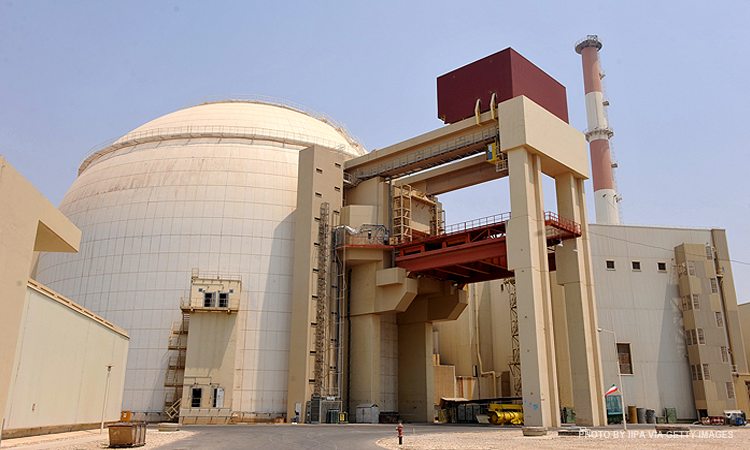
Iran also announced that its Bushehr nuclear power plant joined the electric grid, making it the first Middle Eastern country to produce commercial electricity from atomic reactors.
The IAEA released a report saying that it has “serious concerns” and “credible” information that Iran may be developing nuclear weapons.
2012
The IAEA confirmed that uranium enrichment has begun at the Fordo nuclear facility in the Qom province in northern Iran.
The European Union (EU) announced it would ban the import of Iranian crude oil and petroleum products.
In a Senate testimony National Intelligence Director James Clapper said there’s no evidence Iran is building a nuclear bomb. Central Intelligence Agency (CIA) director David Petraeus agreed.
March 28, 2012
Discussions regarding Iran’s nuclear future stalled.
April 14, 2012
Talks between Iran and six world powers resumed, over Iranian nuclear ambitions in Istanbul, Turkey.
About three months after, a full embargo of Iranian oil from the EU took effect.
September 2013
Iranian President Rouhani said in a UN’s general assembly: “Nuclear weapons and other weapons of mass destruction have no place in Iran’s security and defense doctrine, and contradict our fundamental religious and ethical convictions.”
Iran and six world powers including United States, Britain, France, Germany, Russia, and China reached an agreement over Iran’s nuclear program. The deal called on Iran to limit its nuclear activities in return for lighter sanctions.
January 2014
Iran started eliminating some of its uranium stockpile and began suspending high levels of uranium enrichment.
The EU announced that it has suspended certain sanctions against Iran for six months.
2015
A deal was reached on Iran’s nuclear program, which reduced the number of Iranian centrifuges by two-thirds. It placed bans on enrichment at key facilities, and limited uranium research and development to the Natanz facility.
Related: Iran’s leader accuses world powers of trickery over nuclear deal
July 20, 2015
The UN Security Council endorsed the nuclear deal.
January 16, 2016
IAEA Director General Yukiya Amano said Iran has completed all the necessary steps agreed under the nuclear deal, and that all participants can begin implementing the Joint Comprehensive Plan of Action (JCPOA).
Related: Sanctions lifted after Iran found in compliance on nuclear deal