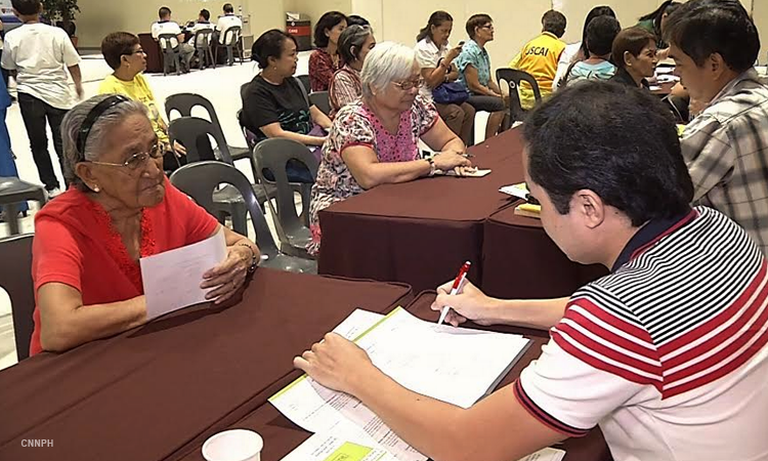

Metro Manila (CNN Philippines) — Leonarda De Guzman Roxas is a Social Security System (SSS) pensioner.
Her husband succumbed to heart attack in 1995. She’s been receiving her husband’s social security pension of P3,500 per month and an additional P1,600 per month from her own SSS contributions for more than 10 years.
“Masaya naman ako. Okay, napagkakasya naman. Okay din yung mga discounts namin malaking tulong.”
But unlike Roxas, 73-year-old Ulirang Nakatatanda Awardee Rosita Lacson doesn’t get pension from government.
Lacson has not maintained her social security contributions, so she cannot receive pension. A stay-at-home spouse, she has spent most of her life as a volunteer for an organization that supports the elderly.
“Nakatatanda na tumutulong sa kapwa matanda. Ginagawa ko to kasi may mga kawawa na wala nang nag-aalaga. Binibisita, pinapaliguan inaalagaan… Sana magkaroon ng universal social pension para sa amin,” Lacson said.
To qualify as a pensioner, a senior citizen must have at least 10 years worth of contributions for the private sector and 15 years for government.
SSS pensioners receive P1,200 per month. For the Government Service Insurance System (GSIS), the minimum monthly pension is P5,000 per month.
Last August, the Senate Committee on Government Corporations and Public Enterprises approved the bill setting a P2,000 across-the-board increase in SSS retirees’ monthly pension.
But concerns were raised over the fund life of SSS, which will be cut short from its original target date in 2042 to 2029.
“Sana yung ganyang mga desisyon, balansehin kung may increase of benefits tukuyin kung saan yan kukunin. Kasi ‘pag natuloy yan baka mawala na ang SSS,” Public Affairs Vice President of SSS, Marissu Bugante, said.
Some pensioners believe the raise is feasible, and it’s just a matter of financial management on the part of SSS.
“I don’t buy that. Yung sinasabi nilang maba-bankrupt ang SSS. Ang question is saan ba nila ini-invest yung pera namin for the past years na nagko-contribute kami? Saka anong growth?” SSS pensioner Norma Tinambacan said.
Aside from pension, the Department of Social Welfare and Development (DSWD) said senior citizens should avail of their benefits in the Expanded Senior Citizens Act.
These include the 20% discount on various categories and services; exemption from the 12% value added tax; 5% special discount on prime commodities like food, fresh agriculture products; 5% discount on water utility and electricity consumption; and other discounts on various products and services.
“Nadagdagan yung benefits. Mas dumami ang free services lalo na sa health. Meron pang educational opportunities partnership with TESDA (Technical Education and Skills Development Authority) para doon sa mga gusto pang mag-hanapbuhay. Anchored on Social Protection Framework sinusubukan ng gobyerno na alagaan sila sa iba-ibang aspeto, pinapaganda pa yung mga benepisyo nila,” Atty. Germaine Trittle Leonin, head of the National Coordinating and Monitoring Secretariat of the DSWD, said.
Leonin said it’s important for senior citizens to be aware of these privileges with the law’s broader coverage.