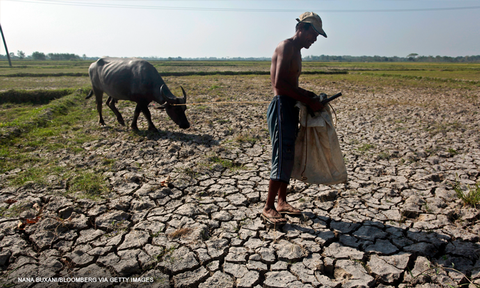

Metro Manila (CNN Philippines) – Dry farmlands, stunted growth of livestock, fishes dispersing and moving to deeper and cooler waters — these are just some of the grave effects of an intense dry spell on agriculture.
This early, the El Niño episode has wreaked havoc in the agricultural sector.
Government had estimated more than P3-billion in losses.
Related: 2015 El Niño may be worse than 1997-98 episode, says PAGASA
Despite this, officials said consumers should have nothing to worry about.
According to the Department of Agriculture, there’s an abundant supply of poultry and hogs, enough to last until February next year.
“It’s the prep that counts most, if you have foreseen i t – sa amin we saw it last year, when they told us it will happen this year, kaya nga pati population ng importers fill up punong puno,” Undersecretary Jose Reano said.
Agriculture officials said early preparations were made to ensure there wouldn’t be any price spikes.
Even the Department of Trade and Industry said prices of basic goods and commodities would remain stable.
“Tatlo pinaghahandaan, supply, price, ensure na adequate inventory.” Trade Undersecretary Vic Dimagiba said.
But supermarket owners said otherwise.
According to them, a potential water shortage might force manufacturers to increase prices of their products.
Philippine Amalgamated Supermarkets Association President Steven Cua said almost all processed goods need water.
“Lahat kailangan ng tubig, fresh produce… water is essential,” Cua explained.
Officials said they would closely monitor price movements and enforce mitigating measures to keep prices and supply stable even amid a dry spell.