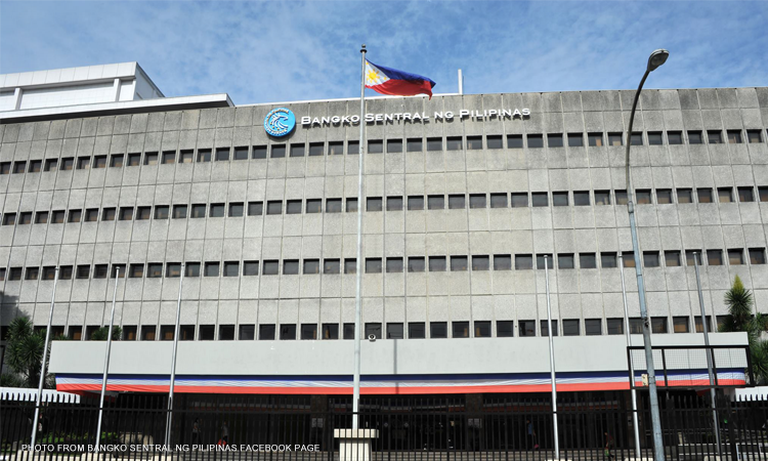

Metro Manila (CNN Philippines) — For the seventh consecutive time, the Monetary Board of the Bangko Sentral ng Pilipinas (BSP) has decided to keep the bank’s policy rates unchanged.
BSP Governor Amando Tetangco, Jr. announced on Thursday (August 13) that the board maintained key policy rates at 4.00 percent for overnight borrowing or reverse repurchase (RRP) facility, and 6.00 percent for the overnight lending or repurchase (RP) facility.
Likewise, the board also steadied interest rates on term RRPs, RPs, and special deposit accounts (SDA). The reserve requirement ratios for universal and commercial banks were kept at 20 percent.
Rates were last raised in September 2014.
Tetangco explained in a briefing that the board’s decision was based on its assessment of prevailing price conditions.
“In deciding to keep the BSP’s monetary policy settings unchanged, the Monetary Board observed that the recent benign inflation outturns have been the result of favorable supply-side conditions, which are seen as largely transitory.”
Headline inflation last July dropped to its lowest level in 20 years, according to figures from the Philippine Statistics Authority (PSA). The slowdown marked a third consecutive month for the rate to reach a two-decade low.
The PSA reported on August 5 that the metric slid further to 0.8 percent from the previous month’s 1.2 percent and July 2014’s 4.9 percent.
According to the BSP, July’s figure subsequently brings year-to-date inflation to 1.9 percent, slightly below the government’s 2.0 to 4.0 percent target range for 2015. Although it predicts inflation to pick up and stabilize within the government’s target range of 2 percent to 3 percent over the rest of the year, it expects the metric to settle slightly below the range for 2015.
“[T]he Monetary Board noted the upside risks coming from pending petitions for power rate adjustments and the impact of stronger-than-expected El Niño dry weather conditions on food prices and utility rates. On the other hand, modest rise in food and commodity prices, and slower global economic activity could pose downside risks to inflation,” said Tetangco.
“The BSP will continue to keep a watchful eye on domestic and external conditions to ensure that the monetary policy stance stays in line with maintaining price and financial stability.”