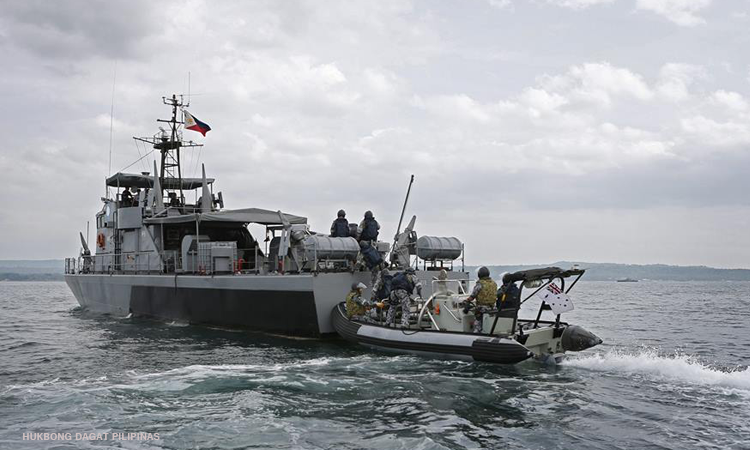

(CNN Philippines) — The Philippine Coast Guard (PCG) said Tuesday (April 21) it is ready to deploy vessels and personnel in the West Philippine Sea a day after Malacañan confirmed reports that a group of Filipino fishermen were water-cannoned by Chinese patrolmen while fishing inside the Panatag Shoal (Scarborough Shoal).
Malacañan confirmed Monday (April 20) that China’s coast guard used water cannons to drive away the local fishermen, damaging some of their wooden boats.
According to acting PCG spokesperson, Cdr. William Arquero, they are just awaiting instructions from President Benigno Aquino III following the latest brushoff with China.
Coast Guard ships are being eyed to escort Filipino fishermen being forced out of their traditional fishing grounds in the West Philippine Sea by China’s vessels.
“If the order comes, whatever they require us – for example, deploying ships – our vessels are available,” said Arquero.
The Coast Guard added that they have eight vessels currently situated in various parts of the country that can be deployed to Panayag Shoal should the need arises.
One of the ships, BRP San Juan, is a 56-meter vessel or about two basketball courts long and carries up to 30 personnel. It is designed to be a purpose built Maritime Emergency vessel with the capabilities to support recovery and evacuation of survivors at sea, including jackstay transfer, provide emergency medical operating facilities, helicopter operations including deck refueling, maritime pollution control and containment, alongside firefighting facilities for adjacent ships and decompression and diving facilities.
While most of the PCG’s ships are primarily used for search and rescue operations, they can also be complemented with artilleries if needed.
Tensions between China and Philippines brought about by the ongoing territorial disputes in the West Philippine Sea continue to mount lately with Beijing’s aggressive actions such as its massive reclamation activities in the West Philippine Sea and the reported water canon incident on Filipino fishermen straining the two countries’ relation further.
Related: AFP bares China’s latest moves in the West Philippine Sea
Aquino has already directed the Foreign Affairs and National Defense departments to come up with a response to the water cannon incident, said presidential spokeswoman Abigail Valte.
No report, no protest
While the government said that it has done — and is doing what it could — to stop China, the Department of Foreign Affairs (DFA), on the other hand, said Tuesday it is yet to make a formal protest on the water cannon incident because they have not received a formal report from anyone so far, said DFA spokesperson Charles Jose.
Jose added that Manila also has no plans of protesting the military grade runway being built by China in the disputed waters of Fiery Cross Reef in Spratlys, as the entire reclamation project is already the subject of a previous diplomatic protest, and that it is also part of the country’s arbitration case now in the hands of the international tribunal on the law of the sea based in The Hague, Netherlands.
The water cannon dispersal was the latest aggressive stance China has done to the Philippines after Chinese ships rammed a fishing boat at Scarborough Shoal a few months back.
China in 2012 took control of Scarborough Shoal, preventing Filipino fishermen from getting near the rich fishing grounds.
China’s rapid reclamation around seven reefs in Spratlys has alarmed claimants, including the Philippines and Vietnam, and has drawn growing criticism from U.S. government officials and the military.
Related: See China’s secret ocean airbase
No need for NSC
Meanwhile, Malacañan said the President sees no need to convene the National Security Council (NSC) amid the massive reclamation activities of China in the disputed territory.
According to Valte, other security officials relevant to the discussion in the West Philippine Sea are always called to security cluster meetings and that the president seeks advice not only through meetings but also on an individual basis.
“In the President’s view, at this time, none. We have dealt with other national security-related issues as well as other matters through the mechanism of the security cluster. And allow me to say that you may be used to the usual members of the security cluster but from time to time, relevant agencies are asked to go or asked to participate whenever there are matters that fall under that department’s competence,” said Valte.
CNN Philippines’ Anjo Alimario, Paola Palma and Juan Carlo Gotinga contributed to this report.