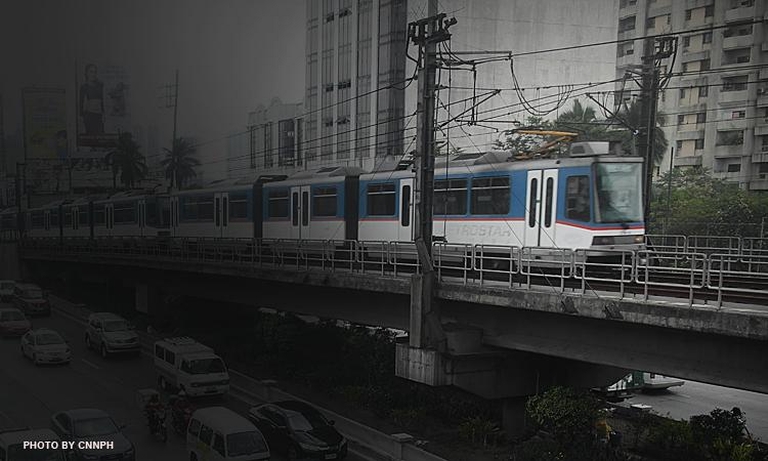

(CNN Philippines) — MRT operations were disrupted Tuesday (April 21) after a number of trains were sent to the depot for fixing. But due to a lack of refrigerants, repairs were delayed — causing the MRT-3 to hit an all-time low.
Around 11 trains were deployed at 8:00 a.m., but as noon neared, the trains were down to five — the lowest number of trains servicing commuters since the MRT started operating in 1999.
Scorching heat
According to Renato San Jose, MRT-3 director for operations, the trains were taken to the depot for air-conditioning repairs.
Given the hot weather, the MRT sought to fix problems with air-conditioning quickly, but maintenance provider APT Global Inc. lacked a substantial supply of refrigerants.
“Before lunch, we discovered that the temperature inside some of the trains changed. That’s why we had to pull them out,” said San Jose, who was referring to a spike in temperature brought about by Metro’s scorching heat — which reached 34 degrees Celsius on Tuesday.
According to protocol, even if only one car would indicate a higher temperature, the entire train would have to be taken back to the depot for repairs.
Long queues
More than 10,000 passengers were affected as entry in stations were controlled past noon. Some braved long queues and even longer waiting periods.
As of 1:00 p.m., seven trains were operational, but the number still wasn’t enough for the thousands of passengers who were expecting a hassle-free commute.
Global APT, on the other hand, clarified that the undersupply of refrigerants wasn’t caused by a lack of foresight. Instead, the maintenance provider blamed the month-to-month contract that limited them from purchasing materials in bulk.
In a day, the about three to four instances of air-conditioning problems are met by Global APT.
Meanwhile, 14 to 15 trains were expected to be running by Tuesday evening.
Global APT will face a penalty of P60,000 to P80,000 per coach for trains undelivered. Ideally, there should be 20 trains running on peak hours.
The MRT, which went on full operation on July 20, 2000, originally planned to run up to 60 three-car trains daily.