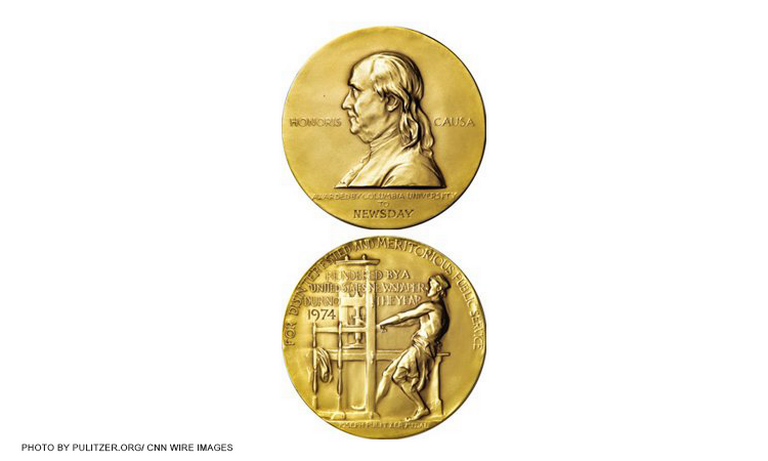

NEW YORK (CNNMoney) — Columbia University recognized newspaper coverage of local calamities and international emergencies in the 99th annual Pulitzer Prizes on Monday (April 20).
The Post and Courier newspaper in Charleston, South Carolina, recently in the news for its coverage of Walter Scott’s death, received the Pulitzer for public service for an earlier series of stories about domestic violence. The series was titled “Till Death Do Us Part.”
The Seattle Times staff won for breaking news coverage of a landslide and the St. Louis Post-Dispatch photography staff won for images out of Ferguson, Missouri.
The New York Times won the international reporting prize for what the judges called “courageous front-line reporting” about Ebola. The Washington Post won for national reporting for Carol D. Leonnig’s “smart, persistent coverage” of Secret Service shortcomings.
And the Wall Street Journal newsroom won a Pulitzer for the first time since Rupert Murdoch acquired the newspaper in 2007. It shared the investigative reporting prize, for its project called “Medicare Unmasked,” with The Times, which won for a probe into Washington lobbyists.
The Times also took home a third prize for feature photography. It was awarded to Daniel Berehulak, a freelancer who covered the spread of Ebola in West Africa.
The Pulitzers are generally considered to be the most prestigious prizes in American journalism. In newsrooms like the New York Times and the Los Angeles Times, staffers gathered at 3 p.m. ET to hear the winners read aloud.
Los Angeles Times television critic Mary McNamara won the Pulitzer for criticism. Her colleague Diana Marcum won the prize for feature writing.
Bloomberg News — this year’s only winner that is not a newspaper — celebrated its first Pulitzer ever, after becoming eligible to win several years ago.
Reporter Zachary R. Mider received it in the explanatory reporting category for detailing how “corporations dodge taxes and why lawmakers and regulators have a hard time stopping them.”
For the first time, magazine journalism was eligible in two categories. There were no winners, but The New Yorker was a finalist in one of the categories.
David Carr of The New York Times, who died in February, was a finalist in the commentary category. The judges cited his “columns on the media whose subjects range from threats to cable television’s profit-making power to ISIS’s use of modern media to menace its enemies.”
The commentary winner was Lisa Falkenberg of the Houston Chronicle, for what the judges called “vividly-written, groundbreaking columns about grand jury abuses.”
The sole digital media finalist was the liberal web site the Daily Kos, in the editorial cartooning category.
The Huffington Post and InsideClimate News earned Pulitzers in past years, despite not having print components.
Mike Pride, the administrator of the Pulitzer Prizes, said that although all the winners except Bloomberg hailed from print newsrooms this year, “the digital components of their work is becoming more and more sophisticated.”
“Newspapers know where the future is,” he said.
This story was first published on CNN.com, “2015 Pulitzer Prize winners named.”