
(CNN Philippines) — The Fall of Bataan, which happened on April 9, 1943, and the Fall of Corregidor, which took place about a month later on May 6, are the lowest points in the World War II for the Philippines.
But those events also drew the finest show of gallantry from thousands of Filipino and American troops who stubbornly stood their ground against the invading forces of the Japanese Imperial Army and Navy — despite dwindling food, ammunition, and other equipment.
Among those who were keenly aware of this supply shortage was Col. Ernest B. Miller of Brainerd, Minnesota.
He was commander of the 194th Tank Battalion of the National Guard, which was covering the withdrawals of the troops — about 120,000 in all — into Bataan.
He described the situation briefly in his book, Bataan Uncensored, which was published in February 1949.
On New Year’s Eve in 1941, he and his troops were guarding the Calumpit Bridge, on the one road to Bataan from San Fernando in Pampanga.
The troops were executing War Plan Orange 3, which Gen. Douglas MacArthur ordered for implementation on Dec. 23, 1941.
The original plan called for American and Filipino troops to defend the beachheads against Japanese invasion.
So MacArthur ordered this plan executed shortly after the Japanese attack on Pearl Harbor in Hawaii on December 7, 1941 (December 8 in the Philippines).
Hours later, Japanese planes attacked main air bases in Luzon — Clark Field in Pampanga and Iba Field in Zambales — and the headquarters of the United States Asiatic Fleet in Cavite.
On December 23, with the key beachheads having fallen to the invaders a day before, MacArthur fell back on WPO3, which called for the withdrawal of all troops into Bataan and Corregidor, where they are expected to hold for six months until reinforcements could arrive to drive away the Japanese.
But that, of course, didn’t happen.
And Colonel Miller saw the reason for that in the vicinity of Calumpit Bridge on New Year’s Eve:
The famous Orange Plan (WPO-3) was in effect. The last Quartermaster units from Manila and the Port Area were moving into the areas destined to become the Philippine defender’s last stand.
A young Tanker, his face expressing bewilderment, was speaking words never to be forgotten. They still ring in my ears and they constitute one of the reasons for the story I am telling.
“Hell, they’re empty!”
I looked — and I saw what I had seen before. The Tanker was calling attention to rumbling truck moving through. Truck that were empty!
There they were — trucks rolling toward Bataan that should have been crammed with life-sustaining food and pertinent equipment procurable only in Manila. My men counted between 100 and 150 empty supply trucks. They rattled like the bare skeletons which most of those watching Tankers were destined to become.
Food and equipment would have given us a fighting chance against overwhelming Japanese war power. But were helpless against overwhelming Japanese war power. But we were helpless — because someone had failed.
Miller explained the cause of the failure, saying: “The simple answer is that there was this period of indecision when foodstuffs, equipment, and other supplies should have been hauled into Bataan and were not. Hence, the empty trucks.”
The result of that indecision Miller also recorded in his book:
Black Thursday — April 9, 1942 — the day the siege of Bataan became a flaming page in history.
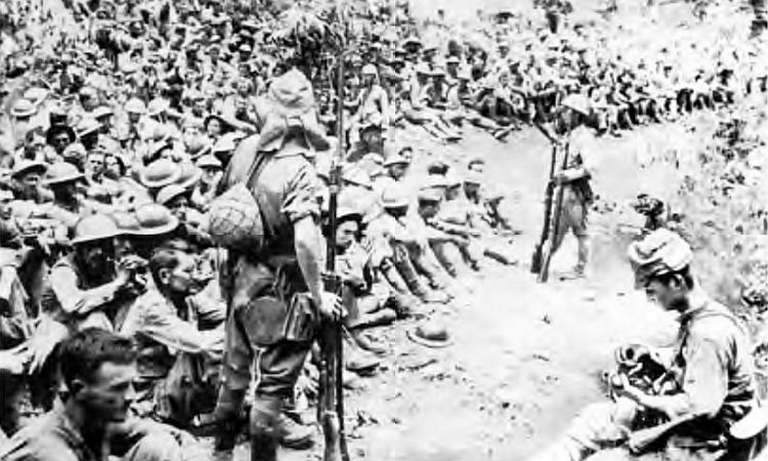
The ragged, starved, disease-ridden expendables shuffling and stumbling into the March of Death — many to die on that march — many to die later in Japanese prison camps or on the hell ships — and the rest, a pitiful minority, destined to a living death of starvation, disease, and abuse for three and one-half years in the hands of a nation which knew no code of ethics… human footballs that also wanted to live… and the sickening realization always clawing at the mind that help had failed to arrived.
The lack of supplies had taken its toll.
What was meant to last for six months ended in surrender in 93 days.
By that tim, the Japanese had killed 10,000 and wounded 20,00 American and Filipino soldiers. It also took 75,000 prisoners — about 60,000 of them Filipinos and 15,000 American.
But the defenders made it a very costly victory for the Japanese, killing 7,000 and wounding 12,000.
In retaliation, the invaders subjected their prisoners to what became known as the Death March — a six-day trek from Mariveles in Bataan to Capas in Tarlac covering about 137 kilometers.
The death toll even before the prisoners could reach Capas was from 2,500 to 10,000 Filipinos and from 100 to 650 Americans.
An estimated 10,000 to 12,000 were able to escape, blending in with the civilians along the way. Many of them would join guerrilla units who tried to make life for the Japanese as hard as possible until MacArthur could make good his promise to return.