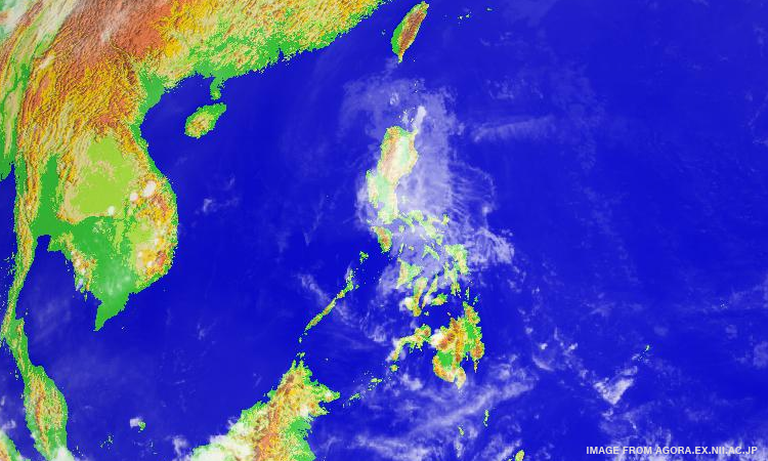

(CNN Philippines) – The erstwhile super typhoon earlier feared to pummel the Philippines on Holy Week turned out to be a weak tropical depression when Chedeng eventually made landfall in Isabela around mid-morning of Easter Sunday (April 5).
And as if that was not enough good news for Filipinos who have been praying hard since last week against a looming typhoon onslaught, Chedeng finally dissipated into a low pressure area (LPA) late Sunday afternoon, according to the 5 p.m. bulletin released by the Philippine Atmospheric, Geophysical, and Astronomical Services Administration (PAGASA). The 5 p.m. bulletin was also the last advisory the weather bureau will release on Chedeng.
Once described as Super Typhoon Maysak (international name) with the strength of a category 5 hurricane, Tropical Depression Chedeng weakened significantly as it made landfall along the shores of Dinapigue, Isabela sometime between 8:00-9:00 a.m. Sunday.
The dramatic decrease of Chedeng’s typhoon intensity also prompted the country’s national disaster agency to celebrate with a thanksgiving mass held inside the National Disaster Risk Reduction and Management Council (NDRRMC) office.
“Today is Easter Sunday and we want to highlight it with a thanksgiving mass, since we were spared of a possible calamity,” said NDRRMC executive director Alexander Pama.
As of 5 p.m., PAGASA’s data showed the LPA’s center at 60 km southeast of Laoag City or in the vicinity of Kabugao, Apayao.
The LPA is now moving across the northern part of Luzon and is expected to continue moving on a northwestward direction towards the West Philippine Sea in the next 12 hours.
Meanwhile, a report from Reuters said hundreds of residents in the coastal towns of Isabela and Aurora have already left evacuation centers to return home after Chedeng’s landfall on Sunday, although officials still warned of heavy rain and rough seas.
The national disaster agency said no reports of casualties had been received, but warned residents in low-lying areas and near mountain slopes to remain vigilant for possible heavy rains, flash floods, and landslides.
All Public Storm Warning Signals have also been lifted Sunday afternoon.
The dramatic weakening of Chedeng on Sunday was generally good news as millions of Filipinos began returning to Manila from beaches and mountain resorts after the four-day Holy Week break.
About 20 major typhoons pass through the Philippines yearly. Almost 8,000 people were killed or missing after Typhoon Yolanda (international name: Haiyan), a category 5 typhoon, struck Eastern Visayas in 2013.
Maysak, which carried winds of about 250 kph at its peak, killed nine people as it barreled through the sparsely populated Federated States of Micronesia east of the Philippines, smashing houses and destroying crops.
Reuters contributed to this report.